When my son was little, I used to give him "Good Guy" prizes when he did something really nice or when he showed patience or was helpful to someone else--you get the idea. Positive reinforcement.
It wasn't all the time, only for special occasions and when I knew the thing he did came from within.
I had a stash of little toys or novelties I would award. Sometimes by giving him a big, loud citation. Like: "James Harris, for showing exceptional patience and self-control while waiting for a really long time at the doctor's office." Or "Being nice to your little sister by playing a game with her and saying funny things to make her laugh", you are hereby awarded this exceptional Good Guy Prize!"
Followed by a military salute and a presentation.
So one day I decided to take a pocket off one of his shirts, sew this Good Guy Metal in shish embroidery and re-attach it to the shirt. He loved to wear that shirt!
And when it wore out, I took the pocket off and kept it.
Showing posts with label Sewing. Show all posts
Thursday, July 23, 2015
Thursday, January 3, 2013
What to do, What to do?
The antique kimono material on my sofa pillow is falling to pieces.
That is to say, the Mon or Japanese family crest symbol, is deteriorating.
And I'm in a quandary as to what to do. Do I sew a backing onto the underside to stabilize it and let it continue to deteriorate? Or do I put a backing on and embroider the surrounding fabric? Maybe I should put a contrasting color behind the Mon and let it lose threads creating a whole new process and design?
Or maybe I should locate some other fabric or motif and applique it over the Mon, creating an entirely new design?
The whole pillow is black and white.
I really don't want to trash it; I love the feel of ancient silk.
P.S. I forgot to mention, the bottom of the Mon is down to horizontal threads in the lower 1/3; the top of the circle is totally coming unfastened and can be lifted up.
Any ideas?
That is to say, the Mon or Japanese family crest symbol, is deteriorating.
And I'm in a quandary as to what to do. Do I sew a backing onto the underside to stabilize it and let it continue to deteriorate? Or do I put a backing on and embroider the surrounding fabric? Maybe I should put a contrasting color behind the Mon and let it lose threads creating a whole new process and design?
Or maybe I should locate some other fabric or motif and applique it over the Mon, creating an entirely new design?
The whole pillow is black and white.
I really don't want to trash it; I love the feel of ancient silk.
P.S. I forgot to mention, the bottom of the Mon is down to horizontal threads in the lower 1/3; the top of the circle is totally coming unfastened and can be lifted up.
Any ideas?
Tuesday, November 27, 2012
More Eye Candy from the Files
I'm always grabbing images off the web to keep for reference.
Now my computer is complaining. So I'll have to print them off onto paper in order to uncrowd my image memory. So, here's a few goodies:
Certainly worth saving choicey bits of fabric, cording, beads, buttons, and frill-frall. Don't you think?
Now my computer is complaining. So I'll have to print them off onto paper in order to uncrowd my image memory. So, here's a few goodies:
Certainly worth saving choicey bits of fabric, cording, beads, buttons, and frill-frall. Don't you think?
Thursday, November 22, 2012
Eye Candy for those who Sew
Well, it's been a while since I posted on this blog.....life seems to intrude and other demands take the time from these things.....
I have been working on a project relating to my clay work (http://www.jeanetteharrisblog.blogspot.com).
I did run across a couple of photos from the web showing a beautiful coat made of denim. It reminded me of a Bog Coat with a modified front placket. I've made a few Bog Coats. They never go out of style and the pattern is so versatile.
They are a wonderful design if you have a very choicey piece of fabric, but not much of it. In a future post, I will publish some material on making Bog Coats, but for now, back to work.
I have been working on a project relating to my clay work (http://www.jeanetteharrisblog.blogspot.com).
They are a wonderful design if you have a very choicey piece of fabric, but not much of it. In a future post, I will publish some material on making Bog Coats, but for now, back to work.
Sunday, August 26, 2012
Patching a Quilt
You never know when you select a fabric for a quilt if that fabric will 'behave well'. Even if you take all the actions you need to make sure the construction is good, there are some fabrics that just don't hold up as well as the others around it.
Click on photos for a closer look.
This is the case with this quilt. Re-sewing the seams together on the top side would make the fabrics uneven and drawn. The yellow bordering strips are coming apart at the seams in places. Since it wasn't heavily quilted in the first place, patching it is easy.
So I searched in my reserve pieces and found a yard of this wonderful ikat. The colors all relate to the colors in the quilt. How lucky can you get.
So, in my spare time, (what is that?) I have been cutting custom squares and laying them over the loose seams covering the whole area.
I'm amazed at how the new sections seem to disappear and blend in. This is a 'reckless' quilt, so the new areas fit right in.
Click on photos for a closer look.
This is the case with this quilt. Re-sewing the seams together on the top side would make the fabrics uneven and drawn. The yellow bordering strips are coming apart at the seams in places. Since it wasn't heavily quilted in the first place, patching it is easy.
So I searched in my reserve pieces and found a yard of this wonderful ikat. The colors all relate to the colors in the quilt. How lucky can you get.
So, in my spare time, (what is that?) I have been cutting custom squares and laying them over the loose seams covering the whole area.
I'm amazed at how the new sections seem to disappear and blend in. This is a 'reckless' quilt, so the new areas fit right in.
Friday, August 10, 2012
The Indigo Top
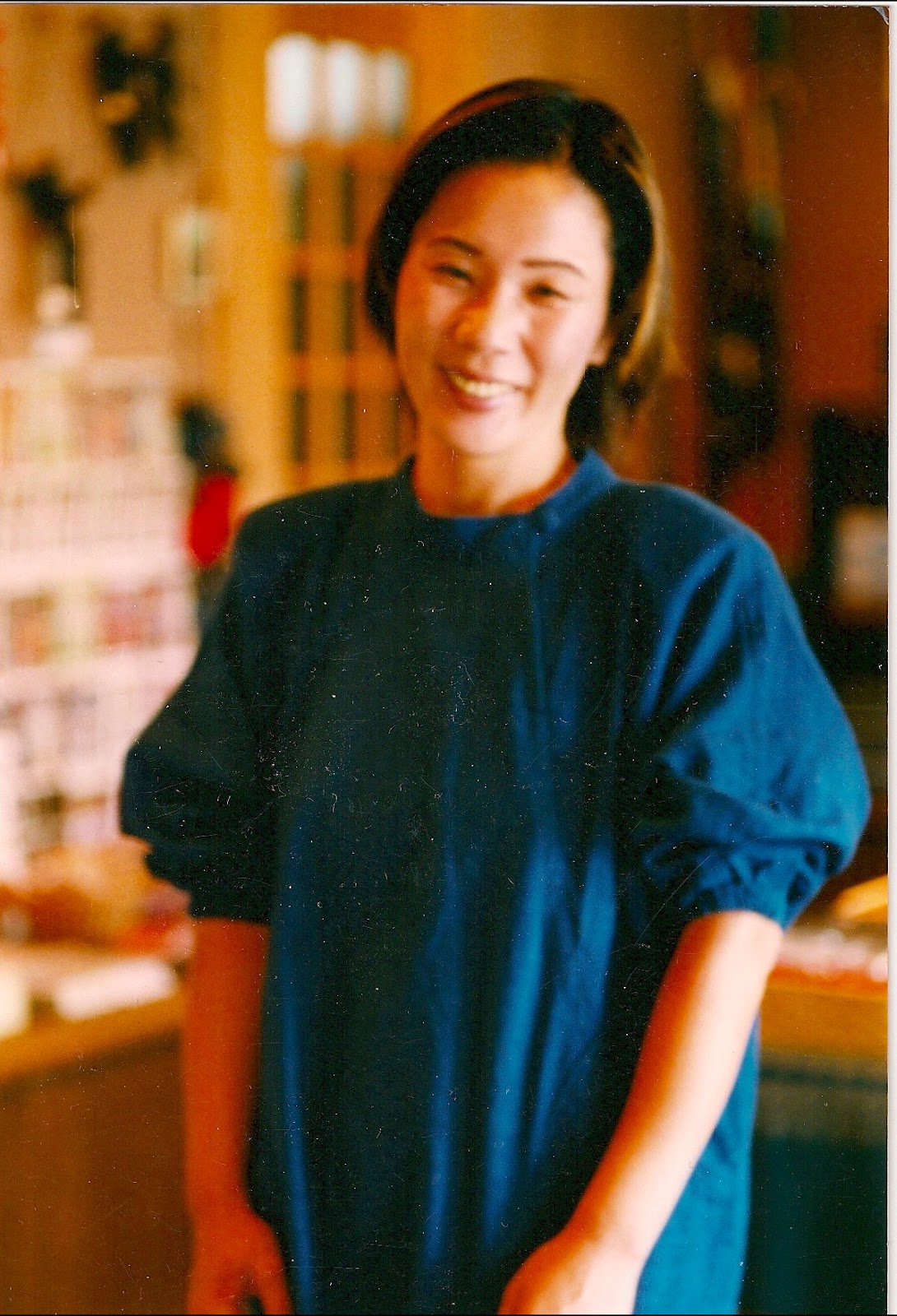
On a trip to Japan, I visited a museum about the production of indigo dye. We were able to try out dyeing our own small piece of fabric and to visit the display of antique pieces used in clothing and the home.
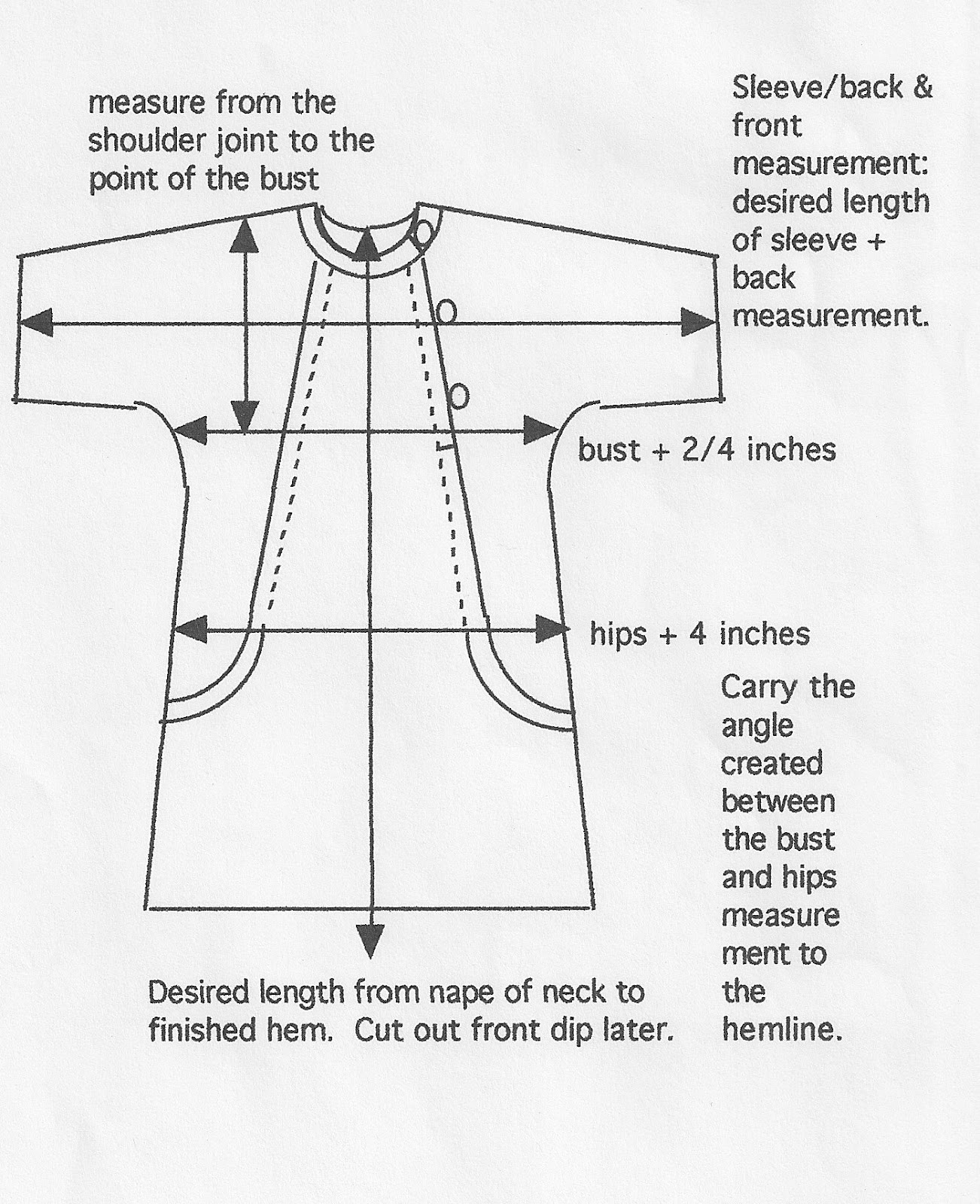
Beside the display and the experience of trying out the dye, I noticed that the guide had on a most interesting shirt. It was a beautiful indigo cotton with an unusual pattern. I asked if I could photograph her. Much later, I used the photo to analyze it and draw a pattern:

This pattern was drawn using a simple little computer program called Super Paint. Too bad it is outdated now. It was great for making black and white drawings.
Saturday, July 28, 2012
Pincushions

I love pin cushions.
Here are three really neat ones......
The green heart is one I made using my shisha skills.
The second one (which seems to have cast off it's pompom, is one I bought somewhere.
I think it's a Hmong piece.
And the third one, I picked up somewhere.
It looks like an Icelandic or Saami people shoe.
I was thinking about putting it on a chatelaine, but it's just too cute to use.
Tuesday, May 1, 2012
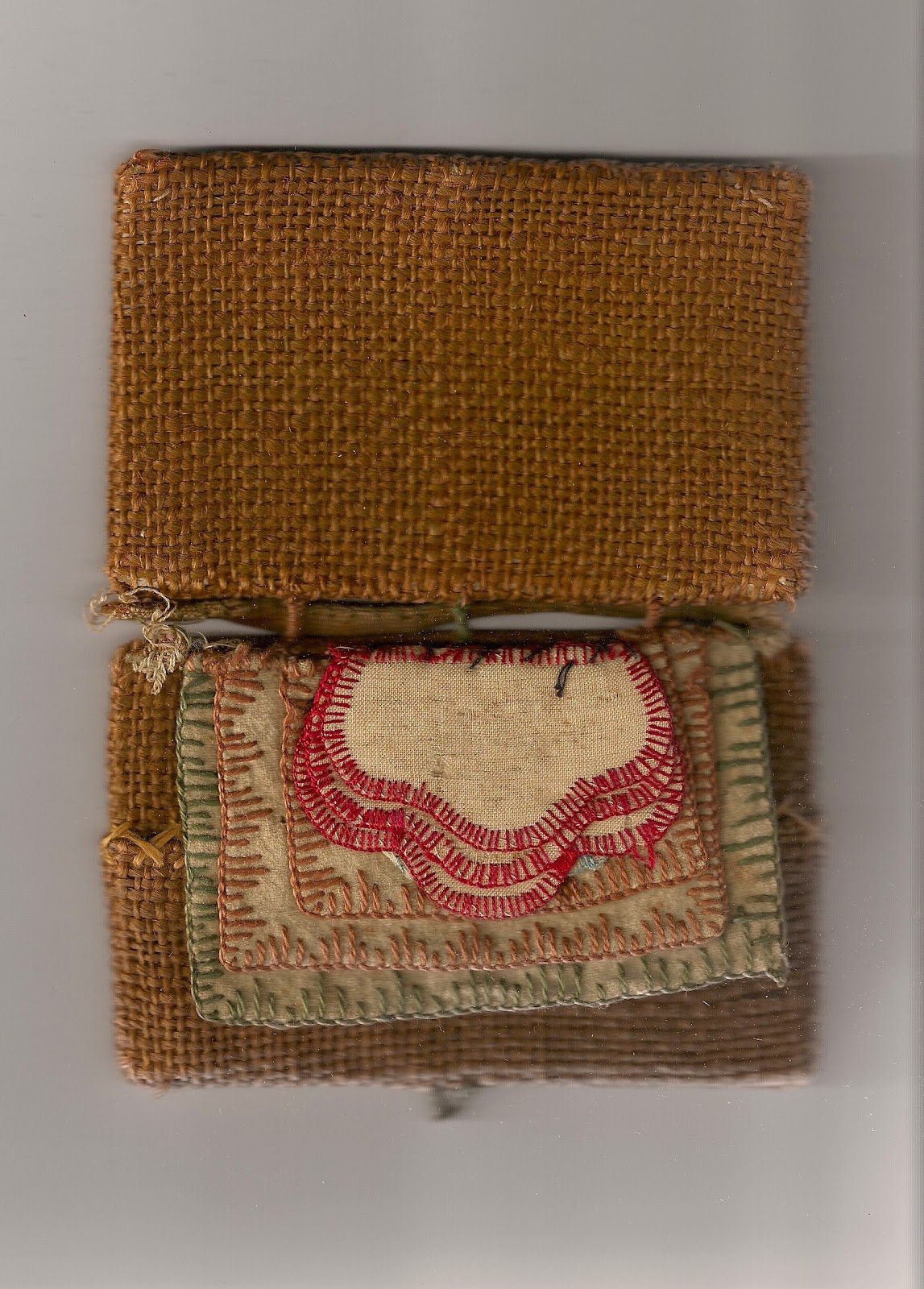
While digging in some boxes of family stuff stored away, I came across this little needle case.
I wish I knew who in my husband's family made it. It could have been the Swedish grandmother, the German needlewoman, the English great-grandmother or someone further back in time. I know it had to have been a few generations back judging from the outer fabric.
And on examining it further, I decided it was made not by a mature woman, but a child.
I would love to know what the inside stiffening material is. I have a feeling it is not cardboard but very thin wood.
Too bad the fastening button is gone; that would have been a big clue. It was very small whatever it was.
The needle case is only about 2 inches by 4 inches. And the strap on the spine is a unique feature--as if it was pinned to an apron or a dress. Maybe it hung from a chatelaine.
Can anyone tell me about the fabric? I'm sure it was much brighter when new. The rusty brown weave is overshot and still has a shine. Silk, maybe?
I wish I knew who in my husband's family made it. It could have been the Swedish grandmother, the German needlewoman, the English great-grandmother or someone further back in time. I know it had to have been a few generations back judging from the outer fabric.
And on examining it further, I decided it was made not by a mature woman, but a child.
I would love to know what the inside stiffening material is. I have a feeling it is not cardboard but very thin wood.
Too bad the fastening button is gone; that would have been a big clue. It was very small whatever it was.
The needle case is only about 2 inches by 4 inches. And the strap on the spine is a unique feature--as if it was pinned to an apron or a dress. Maybe it hung from a chatelaine.
Can anyone tell me about the fabric? I'm sure it was much brighter when new. The rusty brown weave is overshot and still has a shine. Silk, maybe?
Wednesday, February 1, 2012
Delightful Design

I just stumbled upon this delightful little sewing kit shown at http://lovelypackage.com/category/student-work/
More detail about the inside is available there.
I love looking at little hand-made kits and carriers.
(I've been dealing with lost files and a computer hissie fit--It's, not mine, at first. Which, of course, brought on MY hissie fit. You get the picture.
Slogging on----
Jeanette
Monday, September 19, 2011
Special NameTape
The logo mentioned in the previous post is one I have used for my art business.
I still use that metal dye to mark my artwork.
So when I began to make ethnic clothing some years ago, I ordered a custom "name tape" to sew inside as a label.
The company that made this tape is still in business and can be found on:
Thursday, August 11, 2011
Mirror or Shishah Cloth - I
Shishah or mirror cloth is made in areas of India, Pakistan and Afghanistan.
Wikipedia says:
"Shisheh (Persian: شيشه) embroidery, or mirror-work, is a type of embroidery which attaches small pieces of mirrors reflective metal to fabric. The term "shisheh" means glass in Persian, from where the word transferred to Urdu/Hindi and other related languages. Shisheh embroidery was brought to India by the Persian Mogul Dynasty and is now most common on the Indian subcontinent especially in parts of Gujarat, Rajasthan, Haryana and Delhi. This type of embroidery lends a sparkling appearance to the brightly-colored clothes worn in the region, and is very popular for use on clothing, hangings, and domestic textiles.
Shisheh is also used to describe the small mirrors purchased for use in embroidery, which come in varying shapes and sizes. Traditionally, shisheh work was done using mica flakes, but was later subsumed by glass blown into large thin bubbles and broken into small pieces for this use. Contemporary shisheh work almost entirely consists of mass-produced, machine-cut glass shishah with a silvered backing."
Antique pieces are becoming more recognized as pieces of art and the price of good examples is rising.
Contemporary cloth artists are also incorporating shishah or shisha into their work. Linda Matthews of http://www.LindaMathews.com has a great tutorial and beautiful example of using shisha in embroidery today:
Monday, June 13, 2011
Altering Clothes

I buy men's shirts and alter them.
One of the reasons why I like men's shirts is they are usually made of better fabric.
They are sewn up better, most of the seams are French seams.
The shirts last longer and have roomier armholes, shoulders and sleeves.
The pleat in the back also gives a more comfortable fit.
A lot of the time, the permanent press is better too.
I customize the shirts by removing the collar, but leave the base portion intact to make a band collar.
I sometimes cut off the shirt tail too. The shirts have a longer cut and removing the shirt tail doesn't change the shirt that much. But it does give it a better line and proportion for me.
Besides, if you cut the shirt tail off, the re-designed shirt can now be worn over a T-shirt and look more like a tailored top. And a shorter shirt fits underneath a blazer or jacket.
Friday, April 29, 2011
Antique Wedding Crown

When I was about 8 or 10 years old, I discovered this silver plate tiara in an old store.
It was a store my family owned and there was an office/balcony area with old storage shelves that were no longer used. I was there with my dad and he was working on the receipts for the day at a desk after the store was closed.
I, being bored, went exploring, looking around in an area that no one ever went into. I saw something shiny in the back corner of a shelving unit.
I fished it out and took it to show my Dad. It was pretty tarnished; almost black. "Where did you find that?" Dad asked. He had never seen it before and had no idea it had been there for who knows how long.
I took it home, polished it up and found a patent pending date of 1880 engraved on the inside. I used to play dress-up with it. And somewhere along the way, broke it into two pieces.
Many years later, I found a jeweler who could solder it back together.
I put it away and didn't give it much thought after that. I even forgot about it when my own wedding happened.
But I remembered it again and made a very special crown for someone I love very much. I made the background for the veil and sewed the crown onto it. It isn't exactly perfect, owning to the mend, but it looked stunning on the day.
Especially for someone who shares a common ancestor with Princess Diana: Sir Hugh Despencer the Elder. The name was later shortened to Spencer.
Thursday, April 28, 2011
Beautiful Indigo

Just look at this wonderful jacket.
I have a real weakness for indigo. I don't think there has been a time that I didn't own a denim shirt, jacket, coat--something.
At one time, I had a Mao jacket, but I haven't a clue what happened to it.
This garment is so simple; it wouldn't be hard to make your own pattern just by your own measurements. There are no darts, gussets, difficult stuff. Just figure out how the overlap would work and you're home and dry.
I think I would change the width of the bottom to a less flared shape and definitely add at least one pocket.
Can't ever have enough pockets. That's one of the reasons why I buy men's T-shirts. They have pockets. And they are made better than women's, generally.
Friday, March 25, 2011
Another Ring Pillow
This ring pillow was made of white batiste with antique lace, transparent sequins and white and gold thread embroidery.


The ring is really a plain, gold-washed band tacked down to the pillow. Symbolic only. The white ribbon is also lightly tacked in strategic places to keep the look of the bow.


The lace was so beautiful, I only wanted to highlight the shape of the design, so sequins were applied just lightly.
The gold thread is true gold, not Mylar. I took a gold-work class at one time and it came in handy when I wanted to make something super special.
The whole pillow is made to lie flat when the stuffing is removed. That way, it can be placed in a frame, with a little offsetting to allow the ribbons to stay three dimensional. Makes a nice bride's keepsake.
Click on the images for a close-up view.
Wednesday, March 16, 2011
Baby Smock
The fabric is wool lawn, a very light and airy cloth.
I don't know if you can even find this anymore. It was from my stash.
The blue and white ribbon trim is antique and the tiny thistle embroidery was done by hand. (He has a Scottish surname.)
No pattern, just a flat cut-out with facings at the hem, neck and sleeves.
Click on the picture to see the detail.
Saturday, March 12, 2011
Inspiration
I don't know who made this coat. I wish I did. It floated up in images from the web. I love the strength of the design.
Looks like Seminole patchwork, but I can't be sure.
The colors and gradations of fabrics are fantastic.
I'd love to know more about the closings too.
If I were making it, the whole garment would be softer--not so heavily rolled looking. I would somehow eliminate that horizontal at the bust and move it down the figure, but the verticals at the bottom are really flattering.
Click on the image for a closer look.
Monday, February 14, 2011
Antique Lace, Pleats and Feather Stitches
This is my grandson Zachary's christening gown.
Forget the he's nearly six feet tall now, his voice is changing and his life's ambition at this point is to be a champion skate boarder, I still see that round, newly-minted baby face and the chubby waving arms and legs.
He was nearly too big for the gown.
The gown is all made by hand. It's made of Swiss batiste. It goes without saying that the batiste you use must be the best you can find. Why waste your time and effort on materials that are inferior?
I didn't have a pattern. But I had made a lot of wearable art garments based on ancient clothing patterns and began the gown with the yolk and neck and back piece. I started with the front placket. The collar arrangement, number of pin-tucks, insertions of lace and the kind of embroidery to use were the first decisions to make.
I have a large stash of antique lace that I was just itching to use. Some I had collected in England and some I found a whole shoebox full at a garage sale in Portland OR years ago. The large, wide band overlay at the bottom of the gown was bought from a fabric suppler and is modern. (Of course, the best, softest must be put on the neckband.) The gown opens in the back with a simple placket and button closure.
On this gown, the front and back the same. There is no shoulder seam. The embroidery, inserts, and tucks all continue over the shoulder to the back placket. I pulled the threads for all the pin-tucks, pinned them down securely, decided on the lace inserts and entredeux.
All the embroidery is done in white thread using the feather stitch.
The same pattern is repeated down the body of the dress and at the sleeves. I used ribbon insertion lace at the sleeves and on the front and back yolks so I could insert trailing ribbons. The only break in the design is the use of a very wide and intricate band of white lace overlay at the bottom of the dress.
This conceals an area on the inside where the name of the baby and the date of the christening can be embroidered in white thread. I hope the dress will be used by many babies and their names will be added to the list.

Subscribe to:
Posts (Atom)