Showing posts with label Design. Show all posts

Friday, January 18, 2013

Drapes


I usually don't like curtains.  As soon as we moved into this house, I immediately yanked down all the curtains. Windows are never big enough for me.

But

I need to cover the windows in my family room, both for privacy at times and for inside climate control.

My family room and kitchen are connected. The family room windows are around two sides of the large room with a tall glass door giving access to the back yard. The back yard is shallow with access to a golf cart route. Golfers usually whizz by too fast to see in. But not always.

I like to get up and cruise around my kitchen in my nightgown. I don't enjoy eating with people looking into my kitchen. So, drapes and blinds are needed.

I'm not a fan of Venetian blinds either. But sometimes when the sun is blazing in and you don't want it, blinds are good. And at least, you can run them all the way up to the top of the window and get an expansive view.

So here's what happened.


I was flipping through a House Beautiful magazine the other day and saw these great drapes pictured in a room. They looked like something that would just melt into my buff yellow walls; the color appeared to be close to the paint and the design was subtle.   My family room colors are warm light brown woods, white door trim, white floor, yellow-tan walls and light brown leather furniture. Glass-topped, tan base metal side tables with a basket lamp, cork lamp and  a wooden based lamp in light maple-y wood.


So, I searched the 'resources' listing at the back of the magazine to see where they had come from.


No luck. The designer only said they had come from a good discount design firm.

I thought, "Well, I'll try to find something similar." So I Googled 'yellow curtains' and 'gold drapes' and 'tattersal drapes' etc.

Lo and behold, I FOUND them in a photograph that gave the company name. I checked out the sizes and found I could match two long narrow windows, a 4 ft. x 4 ft. window and two very tall glassed doors. And the whole thing was very reasonable. I wouldn't have to hock my car to buy them.

They are very good quality curtains. Beautiful fabric and well made.

They just came yesterday and they are nearly a perfect match for my wall color. Hooray!


The company is Light in the Box.

Tuesday, January 8, 2013

Sometimes, It is good to be a hoarder


Necklace componants:


Mother of pearl antique belt buckle.

Mother of pearl beads, buttons.

Agate beads.

Faux pearls

Real pearls

Glass beads

Seed pods

Wooden beads

Coconut shell beads and buttons

Shell beads

Brass beads and tiny brass bell

Moon stone beads

And for spice: Black onyx and glass beads

Thursday, January 3, 2013

What to do, What to do?

The antique kimono material on my sofa pillow is falling to pieces.    

That is to say, the Mon or Japanese family crest symbol, is deteriorating.

And I'm in a quandary as to what to do.  Do I sew a backing onto the underside to stabilize it and let it continue to deteriorate? Or do I put a backing on and embroider the surrounding fabric? Maybe I should put a contrasting color behind the Mon and let it lose threads creating a whole new process and design?

Or maybe I should locate some other fabric or motif and applique it over the Mon, creating an entirely new design?

The whole pillow is black and white.

I really don't want to trash it; I love the feel of ancient silk.

P.S.  I forgot to mention, the bottom of the Mon is down to horizontal threads in the lower 1/3; the top of the circle is totally coming unfastened and can be lifted up.


Any ideas?

Thursday, November 22, 2012

Eye Candy for those who Sew

Well, it's been a while since I posted on this blog.....life seems to intrude and other demands take the time from these things.....

I have been working on a project relating to my clay work (http://www.jeanetteharrisblog.blogspot.com).


I did run across a couple of photos from the web showing a beautiful coat made of denim. It reminded me of a Bog Coat with a modified front placket. I've made a few Bog Coats. They never go out of style and the pattern is so versatile.

They are a wonderful design if you have a very choicey piece of fabric, but not much of it. In a future post, I will publish some material on making Bog Coats, but for now, back to work.

Friday, August 10, 2012

The Indigo Top

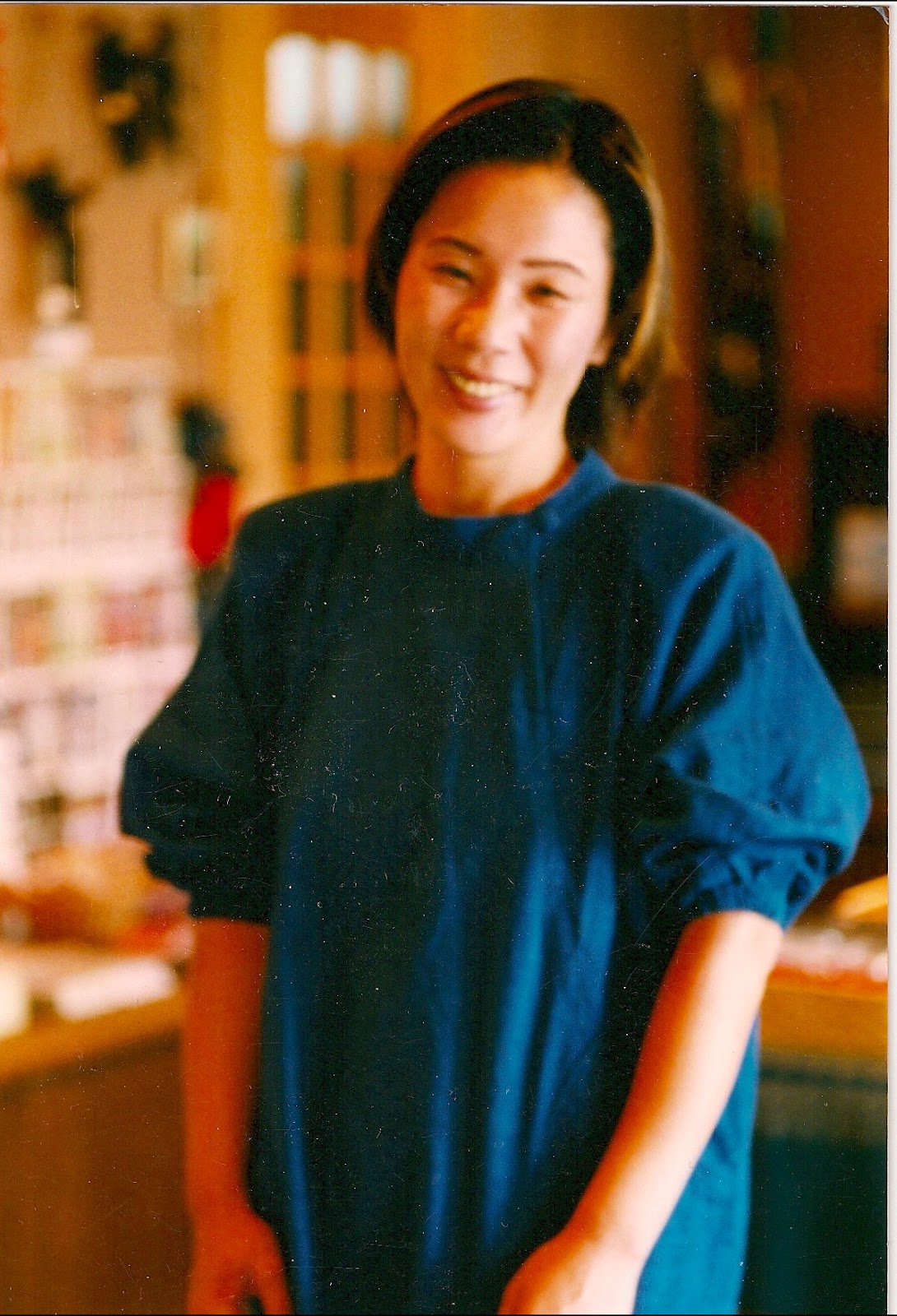
On a trip to Japan, I visited a museum about the production of indigo dye. We were able to try out dyeing our own small piece of fabric and to visit the display of antique pieces used in clothing and the home.

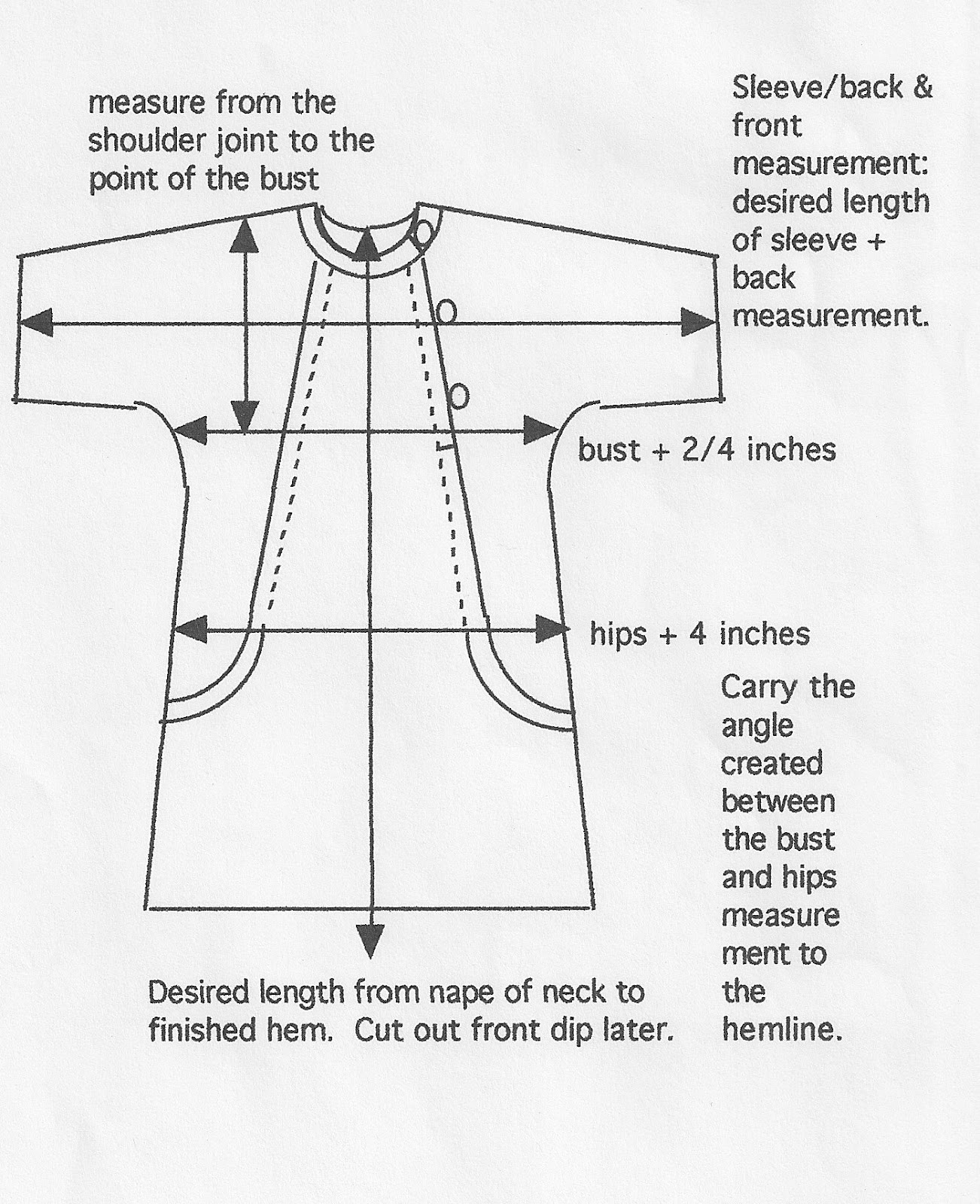
Beside the display and the experience of trying out the dye, I noticed that the guide had on a most interesting shirt.  It was a  beautiful indigo cotton with an unusual pattern. I asked if I could photograph her.  Much later, I used the photo to analyze it and draw a pattern:


This pattern was drawn using a simple little computer program called Super Paint. Too bad it is outdated now. It was great for making black and white drawings. 

Thursday, April 28, 2011

Beautiful Indigo


Just look at this wonderful jacket.

I have a real weakness for indigo. I don't think there has been a time that I didn't own a denim shirt, jacket, coat--something.

At one time, I had a Mao jacket, but I haven't a clue what happened to it.

This garment is so simple; it wouldn't be hard to make your own pattern just by your own measurements. There are no darts, gussets, difficult stuff. Just figure out how the overlap would work and you're home and dry.

I think I would change the width of the bottom to a less flared shape and definitely add at least one pocket.

Can't ever have enough pockets. That's one of the reasons why I buy men's T-shirts. They have pockets. And they are made better than women's, generally.


Friday, April 22, 2011

Design

I don't usually save plastic bags. But somewhere, sometime, I bought something; (It may have been tea.....wink, wink) and it was put in a bright yellow bag with this on the side of it.

I liked the design so much, I cut it out and filed it in my "Embroidery" file. One day, this sassy little dragon is going on a pillow, shirt, purse, wall hanging, quilt block. (Minus the 'Ceylon Tea' mind you.)

Wonder if it needs a caption.

"No Cell Phones"

or

"Mind your Tongue."

Saturday, April 16, 2011

Making Your Own Patterns 1 - Monk's Coat

I know of a woman who, in high school, had a favorite Scottish tweed skirt. The fit was perfect. It went with everything she wore. She loved it so much she nearly wore it out. One day, she had a great idea. She completely dismantled the skirt, turned each piece wrong-side out and reassembled the skirt. She's probably wearing it still.

That may be a bit extreme; just a bit. But dismantling a beloved garment to duplicate it makes perfect sense. Commercial manufactures do not use mass produced patterns. And certainly couture designers depend on their own pattern-cutting.

So if you have a garment that fits you to a T, why not dismantle it carefully; either drawing or photographing each step, and make yourself another one.

I've made patterns out of favorite clothing since high school. Sometimes, I have just dismantled the garment and saved the actual fabric pieces and put them in a large envelope. When I wanted to duplicate the garment, I would just pin it on the fabric and cut it out as if I were using a paper pattern.

I did the same thing with my children's cloths.

So, when I was in Tokyo on a potter's tour, I bought two authentic Monk's outfits when I was in Japan. A Terra colored one and a mustard colored one.They are made out of almost denim type fabric; heavy and slightly rough. Except instead of a twill weave as in Levis, they are straight-woven as in broadcloth.


Front View

I decided to make a pattern from the original one since all the pieces are flat with very little complicated sewing involved.

I measured the existing jacket by laying it on a flat surface and measuring each element. The jacket should be loose. It can be adjusted somewhat by how tightly you tie the side ties, but freedom of movement is the object here.

Then I transferred the measurements to a diagram drawn by an old Apple program called SuperPaint. (How I loved this simple little program--sadly it doesn't work any more with new operating systems.) This would probably fit a Woman's Large size. 16-18 or 1X or a Man's LG to XLG.

I also made note of features of the jacket like the angle of the sleeves from the armpit area to the edge of the sleeve. You could put the pocket on either side and make the ties longer if you wish. Note: Most of the diagrams show one tie (two strips) on the inside and one on the outside. However, you can have 4 ties overall if you want.

One part of a pair is sewn to the inside seam on the side, the other tie goes just inside the overlapping lapel and opposite of the inside tie. They can be looped together or tied in a bow. I like to knot the ends of the ties too, just for decorative purposes.

Back View


Note that there is a facing at the back yoke. This can be one square piece, sewn inside with a French seam. This is strictly optional. If the fabric has enough body, the facing can be left out.

It gives structure to the shoulder area.

The fabric can be cut all in one piece, going over the shoulder and down to the front. (length optional) You can use the front/back piece as a pattern and cut the shoulder reinforcing after the initial front/back piece has been cut and folded out flat. See Fabric Layout illustration below.


Original Monk's Jacket measurements.

The Neck and front band is 72 inches long, 2 inches wide when doubled. It is cut 4 inches wide.

The ties are 15 inches long and cut 1 1/2 inches flat; 3/4 inches wide when folded over.


Sewing notes: Sides, back seam and under-arm seams are all French seams.

Attach the neck band all around the front, neck and to the other front. Fold over and stitch down, then stitch in rows (your choice on spacing) to reinforce.

Sides are worn left over right, covering the pocket.

Fabric Layout

The back piece is placed on the fold. The two front pieces are cut out as two separate sections and so is the sleeve, which is shown laid out flat. It could be cut as two pieces laid out on the fold.

The long front finishing band is best cut out as one long piece and the ties can be cut from left-over fabric.

Reverse the front sides and establish the neck hole. Cut a corresponding hole in the interfacing. Sew the shoulder seams; back and two front panels. A neck opening will be created and you can trim the back section in a slight curve to allow the neck band to sit well around the neck.

Shoulder under facing: A square fabric piece that forms an under the shoulder reinforcement can be added. It should be the width of the back and extend down the front of the jacket over the chest. This is an elective added element to the jacket. (see the front and back views for placement.) After the shoulder seam is sewn, add this underlining, sewing a French seam and trimming off the excess fabric.

Sew on the sleeves placing the center of the sleeve at the shoulder seam.

Fold over the jacket at the shoulder, matching the bottoms, arm hole and sleeve seam and sew together in one long seam, Clip the arm hole curve to ease. Leave a side split if desired.

Hem the sleeves and bottom. Then sew the ties by hemming the ends, folding double and stitching down. Attach by folding about 2 inches at the end and stitching them inside and at a corresponding measurement on the inside front piece. (Inside on the left side; outer right front. Inside on the right inner seam; outside on the left front.) See diagram for the front.

Sew on the neckband, attaching it all around the neck and front. Clip for ease at the sides of the neck. Fold over the band and stitch down. If desired, topstitch for reinforcement and design.

Suggestions: a contrasting band and sleeve facing can be added to create a different designed jacket. A contrasting fabric where the sleeve joins the body, the collar and front band and front ties are also areas where different fabric could be used.

Wednesday, April 13, 2011

Woven Scarf

I have an 8 harness Schacht table loom like this one, only I don't have the stand.

The loom has good rubber pads on the feet, so it doesn't move when I'm working on it on a table.
It's a wonderfully versatile loom; the 8 harnesses allow an infinite number of patterns and variations.

Even in a simple twill using different colored warp threads and a sampler-type variation of waft colors, the weaver can accomplish so much.


The neck scarf is mostly all wool with a smattering of loopy synthetic (white) yarn thrown in. It is about 6 feet long and toasty warm.

Normally, I don't like orange. But when it's limited and tempered with purple, blue, white, rose, pink and red, it becomes a whole other thing.

Monday, March 28, 2011

Pillow Slip

At first glance, where would you say this pillow cover came from?


The Southwest?

It's an Art Deco reproduction from a trendy store?

Nope.


It is a vintage Japanese pillow cover.


When I bid and won it on Ebay, I was surprised to find when it arrived that the original tag was still stuck to the fabric.

And it was in Kanji. I recognized the type face as ca. the 1910-1930's.

The fabric is silk challis. Even the snaps on the backing are authentic to the period.

It's probably from the Taisho Period in Japan. This period followed the reign of Emperor Meiji when the influence of Victorian western culture made huge inroads into the Japanese culture.

The Taisho Period saw the advent of motor cars, modern conveniences and the flapper era.


I actually saw this screen in Honolulu. It is nearly life-sized and absolutely stunning.

Design-wise this little pillow cover fits right in there.

The photo does not do the dye colors justice.

As a matter of fact, I have decided to take the cover off my grandmother's feather pillow (The inside is covered with now-fashionable blue-striped ticking) and find a shadow box frame in order to hang it on the wall.